
Indie forefather and reformed “miserablist” Bob Mould is happy to share old Hüsker Dü war stories, but don’t expect him to dwell on his past or to relive it for fun or profit. “I’m blessed to have such a nice history,” he says, “but I’m careful not to cash in on it.”
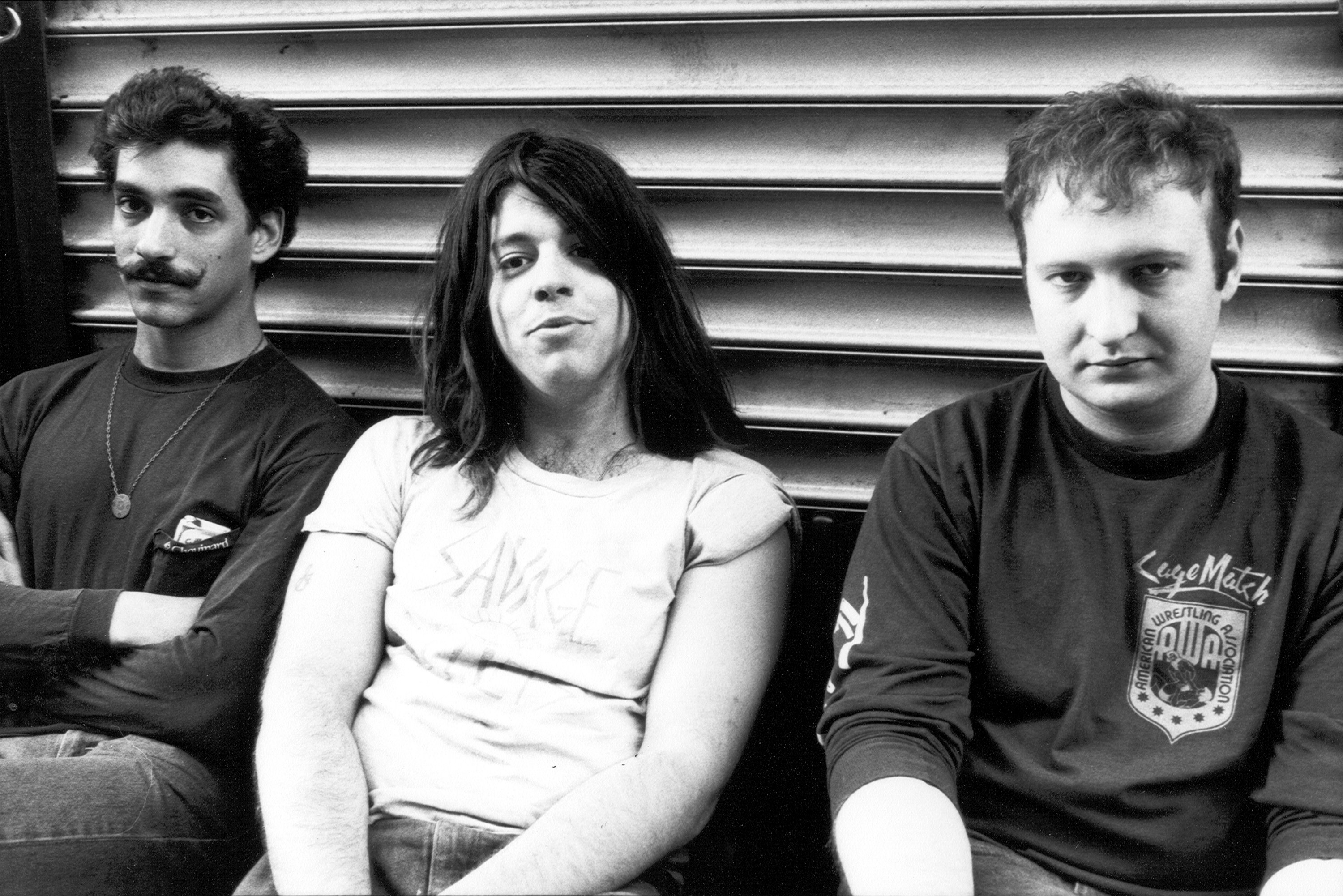
It’s hard to imagine that Bob Mould was once referred to as “literally the meanest person I have ever met” — by one of his own bandmates, no less. Of course, that was more than 25 years ago, when Minneapolis DIY punk trailblazers Hüsker Dü were still at their most brain-meltingly abrasive and booze-and-amphetamine-fueled fastest, before the considerable enmity between Mould and drummer Grant Hart turned hopelessly toxic. And before Mould scraped away layers of noise to reveal himself as one of modern rock’s most influential lights, over the course of eight canonical Hüsker Dü albums, two poppier Sugar full-lengths and one EP, and eight stylistically diverse solo records, the latest of which, District Line (Anti-), plays like a Whitman’s Sampler of all of the above.
Whether he’s mellowed with age or whether his ogrelike disposition was exaggerated for drama’s sake — Mould would argue that both may be the case — he has come to embrace his role as a revered godfather of alternative rock, picking over a salad in a health-food café in the Dupont Circle neighborhood of Washington, D.C., his home since 2002. “I was a miserablist for a long time,” Mould, 47, says, smiling nonmiserably. “Me, Morrissey, Kristin Hersh. I know better now.”
Even though you’re so closely associated with Minneapolis, you haven’t actually lived there since 1989, and you grew up in upstate New York. What is it that you like about living in D.C.?
I moved here because my friends are here and it’s just down the road from New York. The deal is — and I think this really speaks to the content of the new record — that I have a very small life now. Literally, this street, down ten blocks, then two streets each way, it’s a box, and that’s my whole life. Inside this box, I’m comfortable and safe. I have a room I work in at home that’s a special place to me. But the rest of D.C. is weird, because both the military and the government are based here — aggression and deception. And it takes a certain kind of person to move here to work in the industries of aggression and deception. The best is when I go to some upscale bar and guys come up to me and ask what I do — to me, this is the “district line” in D.C., always the first question. So I say I’m a musician, and they say, “Oh, can you make a living at that?” and walk away. If they only knew the things I’ve done and will continue to do. So my life is really simple inside of a very complex, bizarre place.
You’ve been doing a lot more with dance music and electronic music on your recent solo albums and in your LoudBomb project with Richard Morel, as well as DJing at your party, Blowoff. Does that feel like a real departure from your older work?
I stumbled into it. I was living in New York around 1998 and was just surrounded by club music, going to record stores that weren’t indie shops. When I first heard Sasha’s Xpander, I was like, this is [Sugar’s 1993 EP] Beaster, but with synthesizers. This same repetitious, heavy drone, and I just started chasing that down forever. What I like about DJing is, it’s made me a fan of music again. It’s brutal coming up with two hours of stuff to spin, so I really started taking in a lot of new music.
What song do you hear and wish you had written?
When I heard [My Bloody Valentine’s] Loveless, I thought, “Oh, God.” And the second Garbage record, I thought, “This is crazy how good this is” — just pure pop, plus all the density and complexity. When I finally got around to hearing Foo Fighters, well…let’s just say that seemed very familiar to me. [Laughs]
Are you bitter that bands like Nirvana and Foo Fighters had such massive success off a formula that you helped invent?
You have to remember, somewhere in my basement I have the demos for Nevermind, because I was on the short list for producers. In July of 1992, Sugar were performing for 100 people in Morgantown, and a year later, we’re playing for 70,000 people in Belgium. Why would I possibly feel gypped? Not only did I get to spend the whole decade making great music, but more importantly, I was part of a movement of people who created great music and a lifestyle completely different from what had existed before. So when “Smells Like Teen Spirit” showed up on TV, I went, “We won!” Why would I be bitter about not only being there, but getting to be here right now?
After your 1998 solo album, The Last Dog and Pony Show, you announced that you were done doing big rock tours. Why did you feel the need to make that announcement, especially since you’ve done rock tours since?
After almost 20 years of doing it, I was 37 and wanted to have a different life. I wanted to spend more time living in New York City as a gay man, rather than being in a band playing rock’n’roll. It was more spiritual than just not wanting to play loud anymore. And there is a part of me that fears getting older and being a shadow of myself, getting up onstage and not looking like the person who used to do the second side of Zen Arcade. Because that’s a lot of crazy energy, a lot of anger and aggression. Do I want to be the guy who looks like he shouldn’t be doing this anymore?
But you had already quit drinking at that point, right?
I actually got sober in the middle of ’86, toward the end of Hüsker Dü — that’s hard enough to do while in any band, but while in that band…[Laughs] The first thing I did when I got off the road in ’99 was start going to the gym regularly. I’ve got a lot of work to do, because I’m starting to slip again.
Hüsker Dü are considered the first punk band to have signed to a major label, and I was just watching this clip of you guys on Joan Rivers’ late-night talk show in 1987. After you finish playing “Could You Be the One?” you sit down for an interview, and even she starts giving you shit about selling out.
That was pretty cool, actually.
Having gone through all that blowback, as well as having formed your own labels, do you feel like you have a unique vantage point when it comes to the current state of the industry?
I still own all the Sugar stuff. I’ve always tried to protect my work as much as possible, but at the end of the day, this is the entertainment business. I think of music as the highest art form there is, but not everyone involved with promoting a record may feel that way. It’s not the Guggenheim. I’m the type of person who still has the seven-inches I had when I was five years old. The music is sacred and so is the ritual, the backstory that takes you to the song that changes your life. The Internet is wonderful for getting music going and for keeping people connected, but the ISPs became the labels years ago. The labels did it to themselves — there was no artist development; they took advantage of the audience and thought people would buy CDs forever and replenish the catalogs. New bands today have nothing but what they can sell at their shows. And how they get people to those shows, God only knows. Don’t quit your day job. Try to hold on to your publishing and pray.
Listen to those Hüsker Dü records and try to picture us playing like that now. It can’t be done. It’s not the Pixies.
You’ve released your own material in the past. What’s the benefit of being on a label at all at this point?
The promotional muscle — I get the audience Anti- has built from being a known brand, selling similar artists to that audience.
Do you think bands today suffer from not having local rivalries the way you guys had with the Replacements? That sense of competition?
Oh, you mean like Fiddy and Kanye? What a circus. That was the best they could come up with all year? That was the Super Bowl? That was so pro wrestling. That was a loser-retires match.
Speaking of which, you wrote scripts for World Championship Wrestling in the ’90s. Do you miss that at all?
I don’t miss it. That was a hard job. It was like writing a Broadway show every night, and there’s no off-season.
How did that even come about?
I grew up watching wrestling and went to matches at the Montreal Forum. It was huge in the Twin Cities, too. I got to know people in the business, like Jesse Ventura, and eventually weaseled my way into hanging around it. Once I knew how it worked, I became a real student. I’m a quick learner. I had friends at WCW in Atlanta who used to ask me for ideas, and in the fall of ’99, they asked me to take a job.
Having witnessed both drug use in rock and steroid use in wrestling firsthand, do you think there’s a double standard in society? They’re both forms of entertainment, but with one, the drugs are commonly accepted as part of the lifestyle, while in the other, people react with such outrage.
I knew Chris Benoit [the wrestler who killed himself, his wife, and their seven-year-old son in June 2007] really well, so that was a lot for me to take. But let’s look at it for a minute: With wrestling, people like to use the word “fake,” but those guys are the toughest human beings on earth. You fall eight feet flat on your back, you think that doesn’t hurt? Of course the fights are predetermined, but “fake” is a strange word. The biggest problem with all the deaths in wrestling, though, isn’t the steroids; it’s the painkillers. The government is barking up the wrong tree with these investigations. But it is very similar to rock — we want to see people thrown from 12 feet and show up the next day for work.
Was it ever weird being openly gay in pro wrestling, a form of entertainment where so many of the fans seem ignorant of the homoerotic tendencies?
Oh, how could anyone miss the homoerotic tendencies?
Today you regularly update a blog in which you talk about your everyday life. That sort of transparency would have been unthinkable years ago. I remember being scared of you when you were in Hüsker Dü — you were just this imposing, gruff figure.
Everyone was scared of me. But 20 years ago, you had good reason to be. It was the Reagan years, our culture was bad, and I was a young, confused homosexual living in a country that refused to acknowledge me as a human. That will make you angry. Culture progresses with the technology — it’s not like the first time you saw Alice Cooper and thought he was out of his mind. You might see pictures of a band or see a show [back then], but you’d have to fill in the rest yourself.
Both you and Grant Hart were gay, but no one ever spoke about that while Hüsker Dü were active. Looking back, do you wish you had been more open? Would that have even been possible?
We never talked about it that much. As an artist, writing at the time gender-neutral songs, I wanted everyone to be included, and had the band been labeled as gay music, no one would have listened. Fast-forward a few years to 1994: SPIN sends Dennis Cooper to spend two days with me in Austin, saying that if I didn’t come out, they were going to out me. So I capitulated, and now everything’s good, but I came from a very small town and they had to deal with that. One of my friends from high school who was also gay went away and then got killed when he came back. At this point in my life, I feel assured and centered and whole, but to get here? Jesus.
Hüsker Dü may have had the most contentious breakup of any band in recent history. Did any of the wounds heal after you and Grant played together in 2004 at the benefit for Soul Asylum’s Karl Mueller?
Grant got ahold of my lawyer, who gave him my number for some reason, and he asked if he could play a song with me at the show. At the moment, given the gravity of Karl’s situation, I tried for the final time to put all that away and just said sure. [Editor’s note: Mueller succumbed to cancer in 2005.] We did two songs, we talked for five or ten minutes, and someone destroyed my dressing room by vomiting all over it. I figured, clearly, someone’s trying to tell me something. So I packed up my stuff. Grant wanted to hang out a little more, but I’d had enough. I mean, it wasn’t him, but this is why…it’s not even about the two of us. There’s been a number of times over the past 20 years that we’ve tried to come together professionally to sort out business matters, and it’s always difficult. I’m difficult, Grant’s difficult. That’s why I walked away from it and don’t go back, for my own health and sanity. Grant was really nice at the benefit; we were both being careful and respectful, and then afterward I read somewhere that he was sticking it to me again. I just don’t have time for that.
Is this why Hüsker Dü albums still aren’t available for download?
I don’t know anything about any of that. Grant’s lawyer was in charge of the Hüsker Dü estate. I still haven’t heard the live album [1994’s The Living End]. I couldn’t bring myself to listen to it, I had Sugar’s guitar tech check it out instead. Why? I don’t know.
So we won’t be seeing Hüsker Dü headline Coachella anytime soon? Even My Bloody Valentine…
Headlining Sunday night, I know. There’s been talk, but there was never a formal approach, and there probably never will be. Not interested.
But there’s an entire generation of music fans who’ve heard about this important band and never got the chance to see you.
I can’t provide it. I can’t scream like that, I don’t feel like that. Listen to those records and try to picture us playing that now. It can’t be done. It’s not like the Pixies — okay, Charles [Black Francis] can’t yell as hard as he used to, but other than that, it’s pretty much the same.
Do you ever find it odd that the one piece of music of yours that people today hear the most is…
The Daily Show theme. Isn’t that crazy? I was friends with Lizz Winstead, who co-created the show, from back in Minneapolis. That was one of two songs I wrote for the “hubcap” album [1996’s Bob Mould] that didn’t have words, and that’s the one she chose.
Is your legacy important to you?
I absolutely think about it. That was something I learned from getting to hang around with a lot of the Beat guys like Burroughs and John Giorno, just to sit and talk and learn what’s important about what we do. So if it seems like I get hung up on history or protecting memories, it’s because I was taught to. My concern, always, is not to let the past overshadow the present, but believe me, I’m blessed to have such a nice history to work off of, and I’m careful not to cash in on it. I enjoy talking about what it all meant, how we had to rely on friends for shelter and food, the mechanics of it all compared with how it is now. It’s romantic. I’m comfortable with that now.
Discography: Bob Mould
A very selective guide to a very long, very loud career
Hüsker Dü
Zen Arcade
SST, 1984
A harsh rejoinder for anyone who considered hardcore punk and epic ambition to be mutually exclusive, this concept album — the underground’s answer to Tommy — appropriates prog’s pretentiousness, then detonates it by playing it at double speed, while gingerly taking steps toward less frantic songwriting. At the very least, Green Day and My Chemical Romance owe them a beer.
Hüsker Dü
New Day Rising
SST, 1985
Released on the heels of their double-album magnum opus, this is as lean and economical as Zen Arcade is sprawling. One of the few Hüsker songs that Mould deigned to play even during the bitterest postbreakup years, the soaring “Celebrated Summer” may be his greatest moment: It’s “Beautiful Day” on uppers and rocket fuel.
Hüsker Dü
Candy Apple Grey
Warner Bros., 1986
The band’s first album for a (gasp!) major contains, not surprisingly, their most accessible songs, including a couple of Mould ballads (“Too Far Down” and “Hardly Getting Over It”), as well as some of Hart’s best (“Don’t Want to Know If You Are Lonely,” “Sorry Somehow”). The relative lack of screaming here was made up for by their hard-line fans.
Bob Mould
Workbook
Virgin, 1989
That Mould was capable of crafting delicate, acoustic songs did not surprise anyone; that he followed the dissolution of Hüsker Dü with an album containing nothing but, however, may have. “See a Little Light” is hopeful pop, while the caustic “Poison Years” made clear that the wounds suffered from his band’s breakup wouldn’t heal quickly.
Bob Mould
Black Sheets of Rain
Virgin, 1990
If Workbook was a fuck-you to anyone who demanded that Mould remain frozen in amber, shouting while abusing his Flying V, then this is just a fuck-you, period. A primal scream of an album that turned the volume back up, and the songs were looser and maybe more lumbering than anything he’d released prior.
Sugar
Copper Blue
Rykodisc, 1992
Once again craving the comfort of a band, Mould embraces everything he liked about Hüsker Dü (three guys and wall-of-noise guitars), jettisons everything he didn’t (Grant Hart and Greg Norton), then covers it in a perfect lacquer sheen. “A Good Idea” proves that he was listening to the Pixies listening to him.
Sugar
File Under: Easy Listening
Rykodisc, 1994
The bilious six-song Beaster EP must have been cathartic, because Sugar’s second (and final) full-length was as close as Mould had ever come to sustained levity. It’s an odd fit, and possibly more dated than other records, but opening track “Gift” remains as lacerating and exciting a song as he’s ever written.
Bob Mould
Modulate
Granary, 2002
Mould’s first album in four years reflected his newfound fascination with dance music, striking a balance between post-punk gravitas and electronic bacchanalia that may have taken more than a few older fans by surprise.