JANUARY 18, 1994
Here’s what really happened when MTV played Beck’s “Loser” for the first time, in 1994: The culture inverted itself, weirdness was instantaneously mainstreamed, everyone stopped combing their hair, people slept more and purchased broken turntables at stoop sales, dirtbags began using the word art in casual conversation, Michael Cera entered kindergarten.
Here’s what nobody said when MTV played “Loser” for the first time: “Well, I guess this is what we’re doing now.” Here’s what everybody realized when MTV played “Loser” for the first time: Well, I guess this is what we’re doing now.
Also Read
30 Overlooked 1994 Albums Turning 30
When a collective history of the 1990s is written (or, more likely, tweeted) in some distant future, all of the pop historians will mention the impact of “Smells Like Teen Spirit.” That song will become the linchpin for whatever supposedly happened in that chasm between Gordon Gekko and Mohamed Atta. Someday, filmmakers will use the opening riff of “Smells Like Teen Spirit” to signify the ’90s in the same way we use “The Entertainer” as shorthand for the ’20s.
In a hundred years, it might be the only song from the ’90s the average American will recognize; the title and the artist will be lost, but its abstract sound will be emblematic of a bygone era. Its caricature grungeness will survive, and all those future humans who think about the not-so-distant past will care about that. “Smells Like Teen Spirit” was overproduced and impenetrable, but its impact was organic and interpretative — it was an unanticipated watershed whose meaning changed over time. And that makes it completely unlike “Loser,” a song that galvanized how 1994 felt in a most unnatural way.
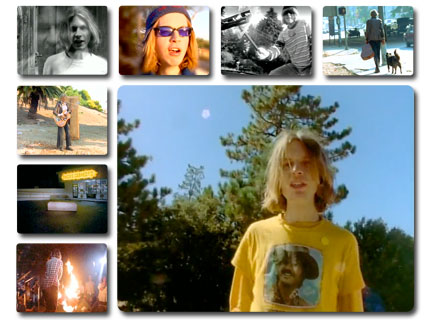
When you listen to “Loser” now (or, even better, if you watch the video), it seems like an engaging, strange song. Not a truly strange song, but a conventionally strange song. The lyrics are faux-Dylan surreal, the music is primitive, and the hook is immediate. The images from the video are like a 16-millimeter art-school project: stock cars from the ’60s, a musician dragging a casket to nowhere, unsexy cheerleaders, a super-rad Rastaman getting high. The experience of watching this in 2010 is like watching Slacker on VHS — the aesthetic has now been duplicated so often it’s impossible to remember how different it once seemed.
It arrived in the pre-Internet era, so deducing what Beck was saying in the chorus was borderline impossible (many thought the Spanish phrase “soy un perdedor” was actually “slide open the door,” which made even less sense). People wanted to figure out what “Smells Likes Teen Spirit” was supposed to mean, but nobody tried that with “Loser.” The first time you heard it, you knew it was about nothing. Beck paradoxically fulfilled his destiny: He sounded like an artist who was lazy on purpose. And this would not have been important if “Loser” had merely been a novelty hit. But that’s not what it was.
The first time I heard “Loser” was also the first time I ever heard of Beck, which isn’t unusual. Before it debuted on MTV’s Alternative Nation in January 1994, the network’s flannel-clad VJs were promoting the shit out of “Loser,” no differently than if it had been the newest release from a band that was already mega-famous. This is partly because “Loser” was already (technically) old — it had been released as an indie single on Bong Load Records in March 1993 (Bong Load pressed only 500 vinyl copies, and college radio stations played it immediately). Hipster kids were already aware of who Beck was.
But most of the world is not hip, so we found out on MTV. That alone seemed meaningful. People had been accusing MTV of dictating public taste for years, but now it really was happening: An unknown single by a person we’d never heard of was already famous enough to open an episode of Alternative Nation, the less-edgy offspring of 120 Minutes. It was like waking up the morning after a coup and discovering the new president was a hobo in a scarf.
People like to compare “Loser” to Radiohead’s “Creep,” but that relationship is bogus. There’s a narrative to “Creep,” and the protagonist’s self-loathing is supposed to be an authentic feeling — when Beck asked people to kill him, only a fool would think he was serious. The Smashing Pumpkins followed “Loser” with the metalesque “Zero,” but that was self-loathing as bandwagon chic — by the fall of ?’95, this was simply the sentiment alt-gods were supposed to have. And “Loser” made that happen, it was lifestyle branding. It made a vision of unspecific, apolitical apathy appear charming and desirable. Overnight, it was so much easier for white people to be cool. All you had to do was look weird and act weirder.
Remember those John Hughes movies from the ’80s, where guys like Andrew McCarthy and his overachieving rich friends inevitably ran the high school? Nobody buys that anymore. It’s a distant reality that seems completely unreal. Ever since MTV decided “Loser” was the future of middle-of-the-road coolness, the underclass has become the overclass. The counterculture has become a product that’s available to everybody. And this didn’t happen naturally; it happened because somebody made that choice and we didn’t know any better. Which, on balance, is probably the greatest thing MTV ever did for anyone.